Through-Container Raman Identification Explained
One of the most operationally significant capabilities of handheld Raman is the ability to identify substances through transparent packaging without opening containers — but this capability has important limitations.
How Through-Container Raman Works
Raman spectroscopy uses laser light to probe the molecular composition of a sample. When the laser passes through a transparent container, it illuminates the contents and the scattered Raman signal passes back through the container to the detector. The instrument can then identify the contents based on their spectral fingerprint — without opening the container.
When Through-Container Analysis Works Well
Through-container Raman analysis works best with transparent, colorless or lightly colored plastic and glass containers. Common scenarios include clear plastic bags, glass vials, transparent pill bottles, and clear plastic packaging. The technique is most effective when the container material itself produces minimal Raman signal that could interfere with the sample spectrum.
Limitations of Through-Container Analysis
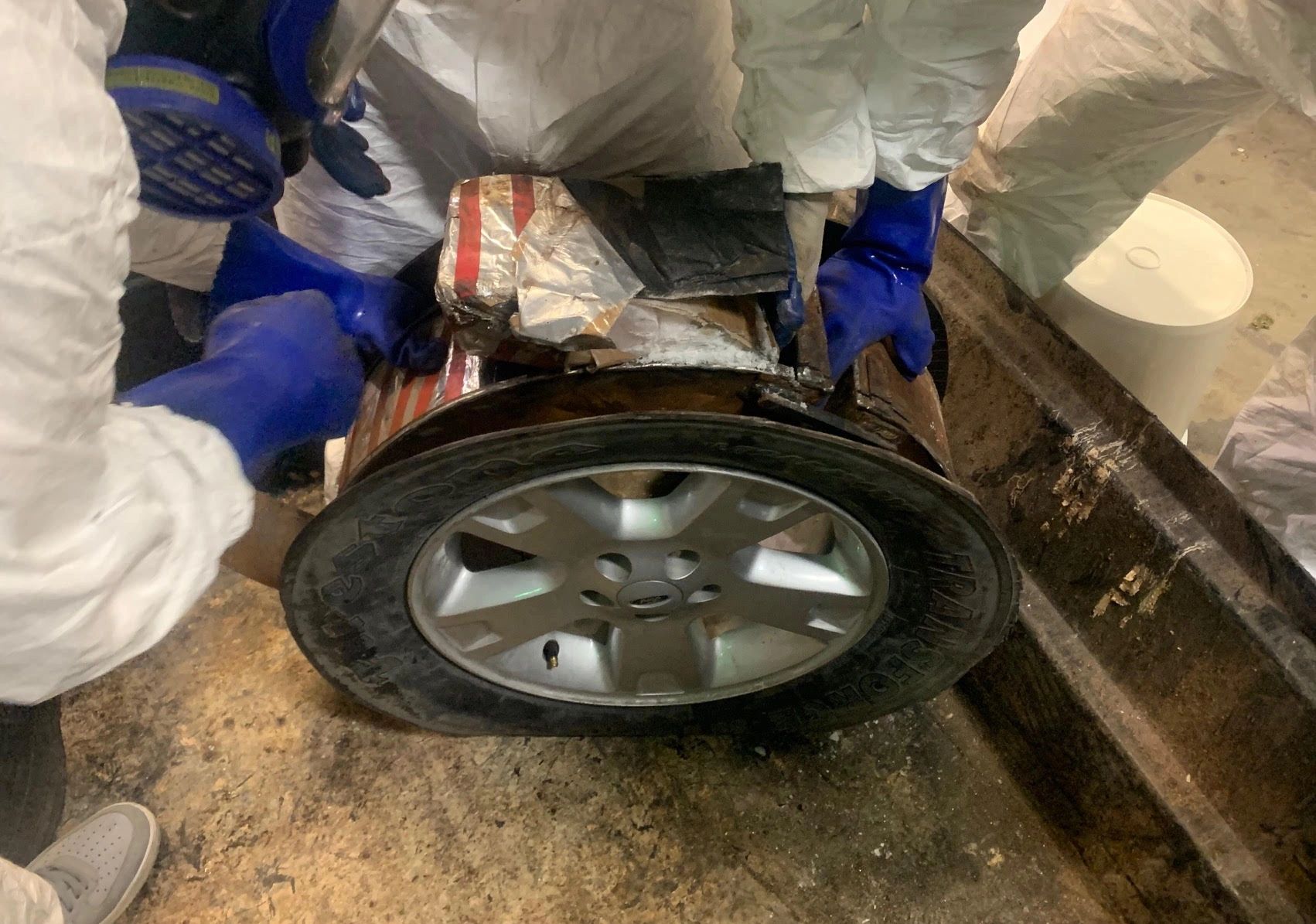
Through-container analysis has important limitations. Opaque containers — including colored plastic, paper, cardboard, and metal — block the laser and prevent through-container identification. Thick containers, heavily tinted materials, and containers with complex surface coatings may reduce signal quality. Dark or highly absorbing samples may also limit performance.
Operational Safety Benefits
The ability to identify substances without opening containers provides significant officer safety benefits. In the era of fentanyl and other potent substances, avoiding direct contact with unknown materials reduces exposure risk. Through-container analysis supports a "don't open it" approach to unknown substance handling.
The Arx mkII and Through-Container Analysis
The Serstech Arx mkII features patented autofocus technology that optimizes the laser focus for different container thicknesses and materials. This improves through-container performance compared to instruments without autofocus. The 785 nm laser wavelength is well-suited for through-container analysis of many common packaging materials.
Practical Guidance
When encountering a suspected substance in a container, first assess whether the container is transparent and suitable for through-container analysis. If the container is opaque or heavily colored, through-container analysis may not be possible. Always follow your agency's protocols for unknown substance handling, regardless of whether through-container analysis is attempted.
Request a Quote or Demonstration
Fill out the form and a Charlie Six representative will respond within one business day.